
Florida’s next generation of architects is looking beyond individual buildings to explore how communities can grow alongside the land.
A Living Lab for Sustainable Design
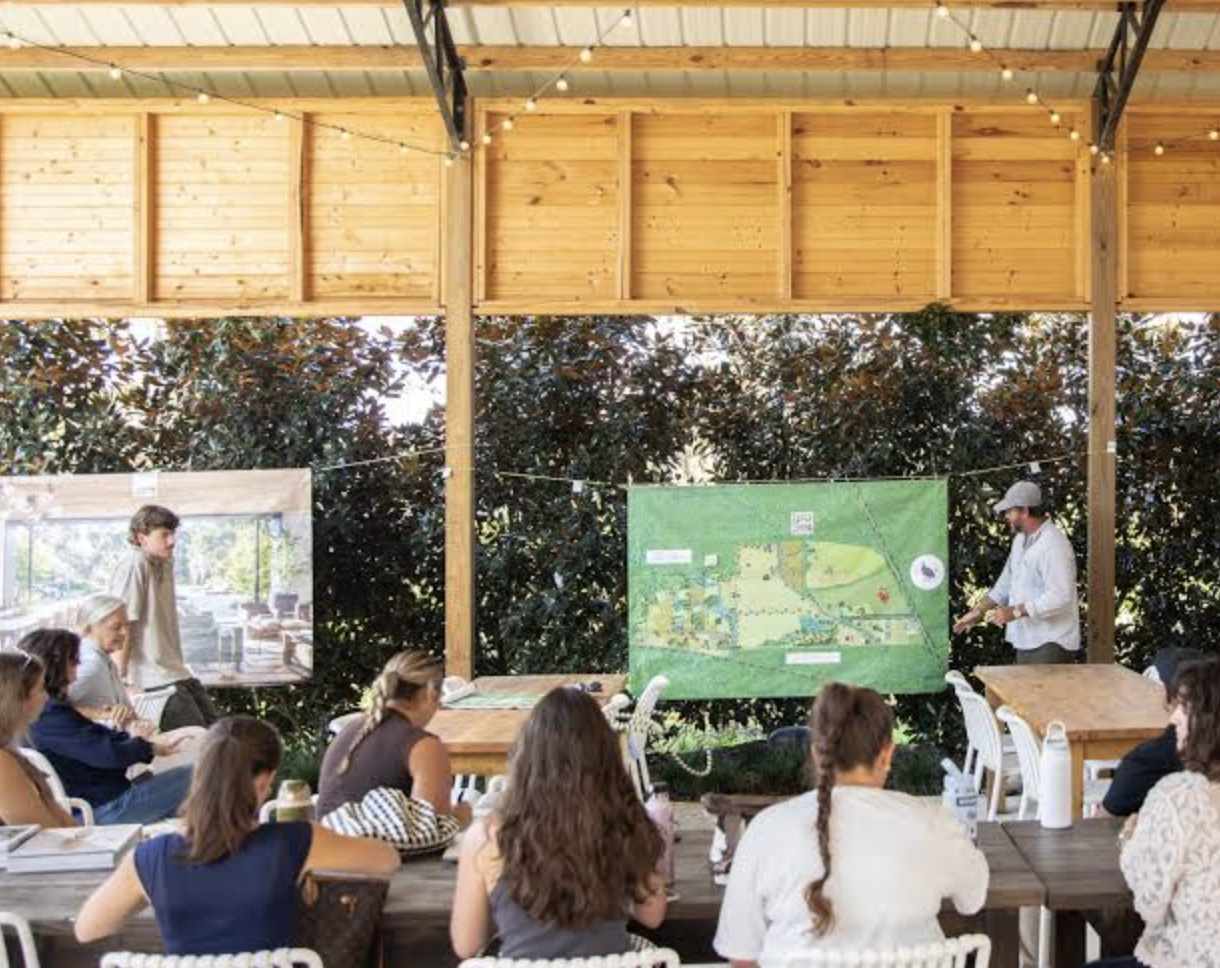
Twelve graduate students in the University of Florida’s new JaxLab architecture program are putting that idea into practice at Congaree & Penn, a 330-acre working farm and agritourism property in Jacksonville.
The students are participating in the Sky Institute Design Competition, which challenges them to rethink how architecture, agriculture, ecology, and technology can work together.
Instead of designing a single structure, the students will first develop a shared master plan for the entire property. They will consider land use, conservation, and the relationship between people and nature.
The project gives students a chance to study sustainable development in a real setting. It also asks them to think about how Florida can accommodate future growth without losing its natural character.
Lessons From Alys Beach
The competition has a notable connection to the 30A area through architect Julia Starr Sanford, whose work includes Alys Beach.
Sanford helped establish the Sky Institute, a nonprofit focused on sustainable building concepts and resilient design. She also designed one of the first homes at Alys Beach after receiving the project in 2004.
Alys Beach offers a useful example of how development can combine design, beauty, and resilience. Its architecture takes inspiration from Mediterranean coastal communities while responding to Florida’s challenging weather conditions.
That approach gives the UF students a strong example to study as they develop their own ideas for Florida’s future.
The lesson goes beyond aesthetics. Sustainable development also involves decisions about density, natural systems, storm resilience, and how people interact with their surroundings.
Rethinking How Florida Grows
The Congaree & Penn project asks students to consider what development could look like beyond Florida’s already built coastal communities.
Sanford believes the state’s remaining developable land sits farther inland after decades of coastal growth. That shift could create new opportunities to rethink how future communities take shape.
Congaree & Penn offers a real-world setting for that conversation. The property aims to maintain its agricultural character while welcoming visitors and exploring new opportunities.
Plans for The Eleven, an upcoming residential community on part of the property, also follow a low-density approach. The development will feature 11 homesites across 10-acre lots. The property will not add schools or large shopping centers.
For the students, the project offers a chance to imagine what sustainable growth could look like when conservation remains part of the plan from the beginning.
Their designs do not need to become actual buildings. Instead, the competition encourages creative thinking about the systems that can make communities resilient and enduring.
The students will spend the fall semester developing their concepts through workshops, seminars, and presentations. Their work could offer fresh ideas for how Florida communities balance growth with the land that makes them unique.
Sign up for the Homely 30A newsletter to stay up to date on 30A.